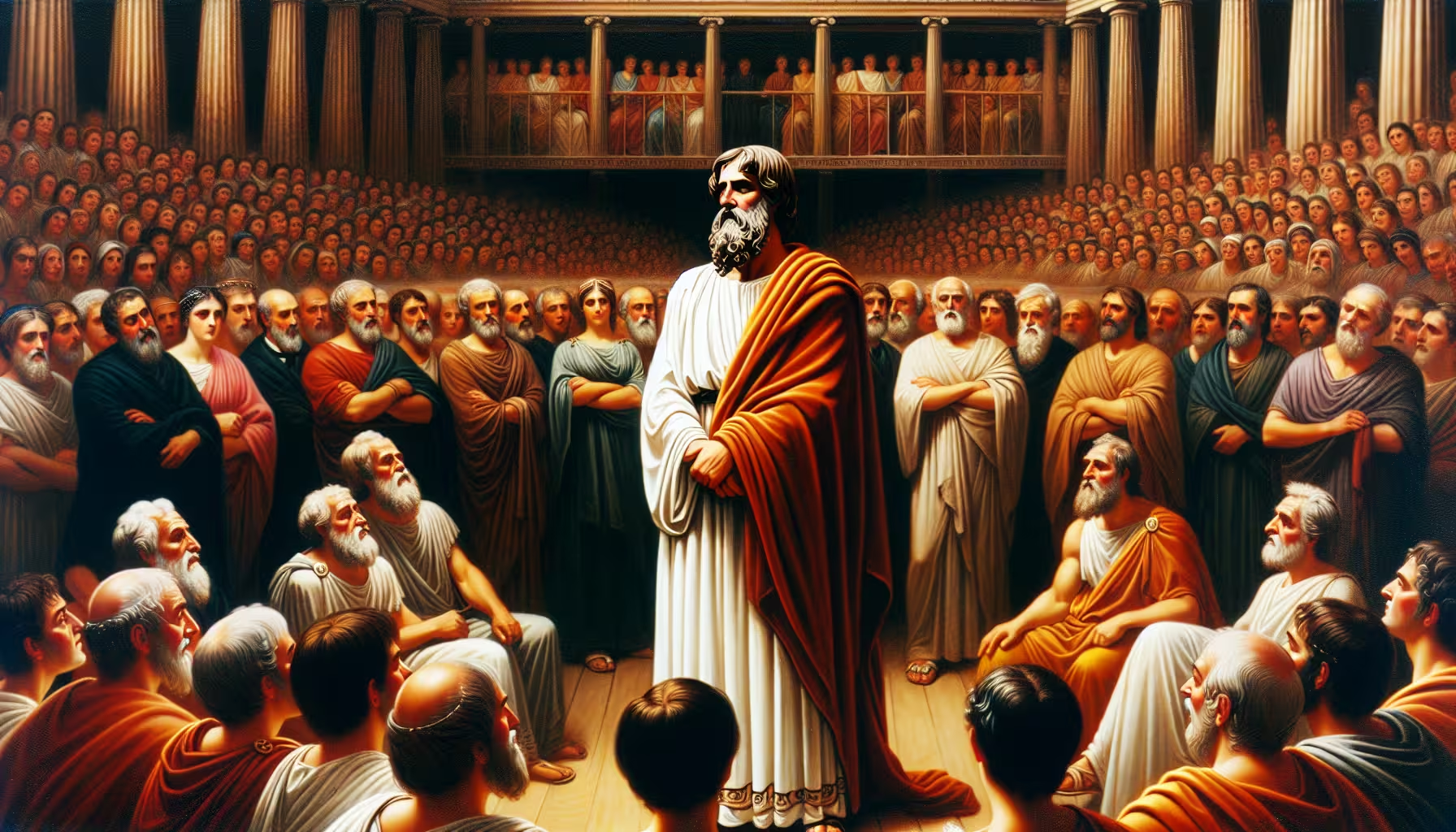
Aeschylus was an ancient Greek playwright and tragedian, known for his contributions to the development of Greek tragedy. His play ‘The Oresteia’ is a trilogy that includes ‘Agamemnon,’ ‘The Libation Bearers,’ and ‘The Eumenides,’ and is considered one of the greatest achievements in ancient Greek drama. Premiering in 458 BC, ‘The Oresteia’ established Aeschylus as one of the most significant and legendary playwrights of his time. His use of dramatic and poetic techniques, his exploration of complex moral and philosophical themes, and his innovation in theatrical presentation have cemented
Introduction
In ancient Greece, the city of Athens was a hotbed of cultural and intellectual activity, and it was here that the playwright Aeschylus premiered his groundbreaking trilogy of plays known as ‘The Oresteia’ around 458 BC. As one of the greatest tragedians of his time, Aeschylus’ works explored timeless themes of fate, justice, and the complexities of human nature. Born in Eleusis, a town near Athens, Aeschylus was deeply influenced by the religious and philosophical currents of his time. His works often grappled with the moral and ethical dilemmas faced by his characters, drawing upon the rich tapestry of Greek mythology and history to explore the human condition. ‘The Oresteia’ is a trilogy of plays that tells the story of the cursed House of Atreus, a family torn apart by betrayal, murder, and vengeance. At its heart is the conflict between the old system of blood retribution and the emerging concept of a legal justice system, a theme that would have resonated deeply with the citizens of ancient Athens as they grappled with questions of governance and morality. Aeschylus’ ‘The Oresteia’ is not only a masterpiece of dramatic storytelling but also a deeply profound exploration of the
On March 19, 458 BCE, Aeschylus’ play ‘The Oresteia’ premieres at the City Dionysia festival, establishing him as one of the greatest tragedians of ancient Greece. This trilogy of plays, consisting of ‘Agamemnon,’ ‘The Libation Bearers,’ and ‘The Eumenides,’ explores the themes of justice, revenge, and the evolution of the legal system in ancient Greece.
Aeschylus’ Masterpiece: The Oresteia
The Premier of a Tragic Tale
It was a momentous occasion in the ancient city of Athens when Aeschylus’ latest play, The Oresteia, premiered at the Dionysia festival. The packed amphitheater buzzed with anticipation as the audience awaited the unfolding of the tragic tale. Aeschylus, a seasoned playwright, had already established himself as a prominent figure in the world of Greek tragedy, but it was The Oresteia that cemented his legacy as one of the greatest tragedians of his time.
Did you know? Aeschylus’ play ‘The Oresteia’ premiered at the Dionysia festival in 458 BC, establishing him as one of the greatest tragedians of ancient Greece. The trilogy of plays, consisting of ‘Agamemnon’, ‘The Libation Bearers’, and ‘The Eumenides’, tells the story of the cursed House of Atreus and explores themes of justice, revenge, and the power of the gods. The Oresteia was a groundbreaking work that introduced the concept of a connected trilogy of plays and won first prize at the Dionysia festival, cementing Aeschyl
Read more:
aeschylus-the-father-of-greek-tragedyaeschylus-mastering-the-art-of-tragedy
aeschylus-triumph-victory-at-dionysia-festival
aeschylus-defiant-stand-at-salamis
enduring-legacy-aeschylus-influence-on-theater
https://www.britannica.com/biography/Aeschylus-Greek-dramatist