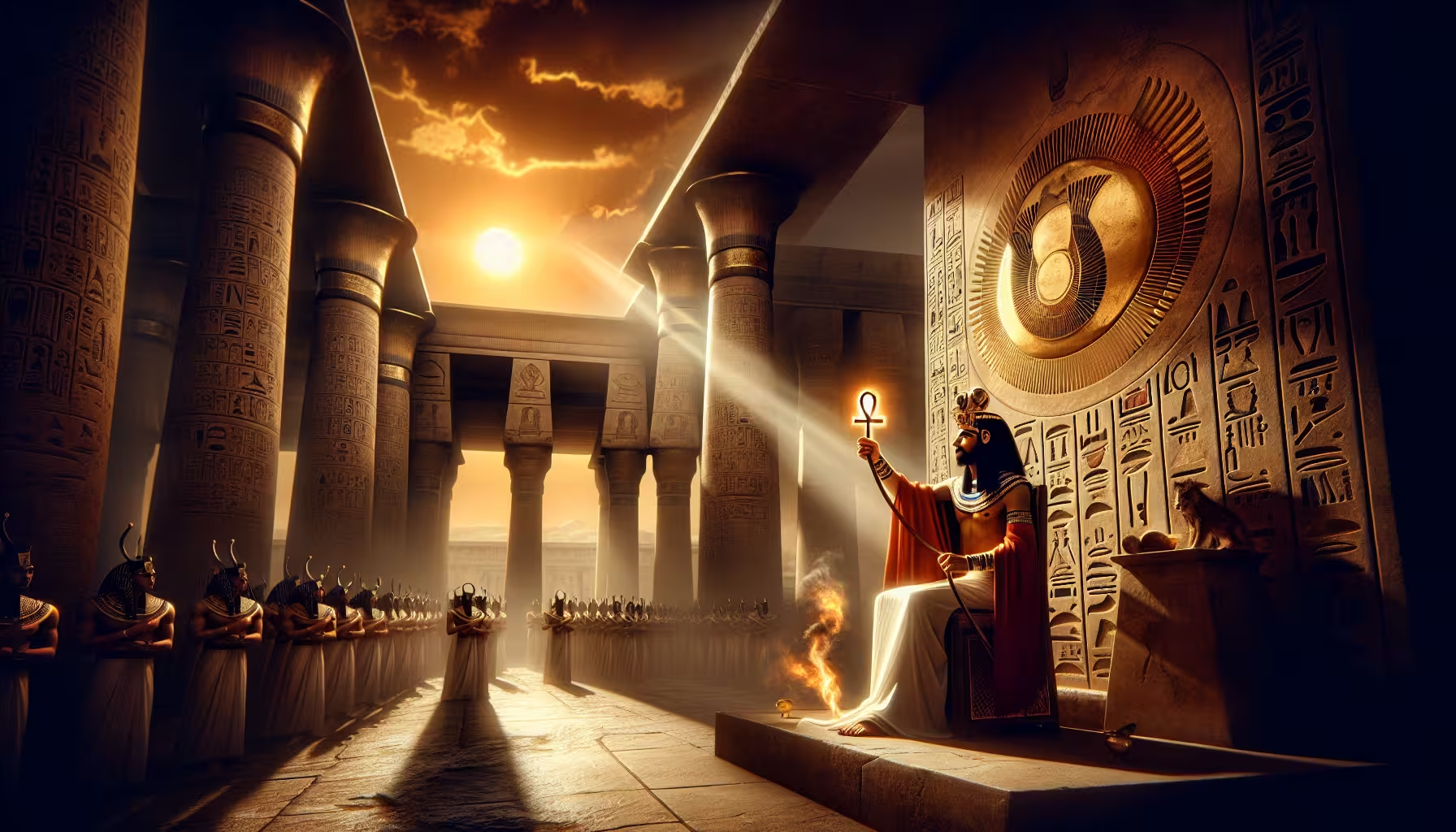
Akhenaten was an ancient Egyptian pharaoh who succeeded his father as ruler and took the name Akhenaten. He is known for his radical religious and cultural reforms, including the promotion of the monotheistic worship of the sun god Aten and the establishment of a new capital city, Amarna. Akhenaten’s reign marked a significant departure from traditional Egyptian religious beliefs and practices. Significant because of his revolutionary religious and cultural reforms, Akhenaten remains a legendary figure in history, sparking intrigue and fascination with his unconventional and controversial reign. His story offers a fascinating look at the complexities of power, religion, and cultural change in
Introduction
In ancient Egypt, the succession of kings was a sacred and highly anticipated event, with the new ruler often seen as a living god. This was especially true for Akhenaten, who succeeded his father as Pharaoh of Egypt, taking the name Akhenaten. His reign marked a significant shift in Egyptian history, as he became known for his radical religious reforms and his devotion to the sun god Aten. Akhenaten’s rule is shrouded in mystery and controversy, and his legacy has continued to captivate historians and archaeologists for centuries. Join us as we delve into the enigmatic life of Akhenaten and uncover the historical significance of his reign.
In 1353 BCE, Akhenaten succeeded his father as Pharaoh of Egypt and took the name Akhenaten. He is known for his religious reforms, including the introduction of the worship of a single god, Aten, and the establishment of a new capital city called Akhetaten (modern-day Amarna).
Akhenaten Ascends to the Throne
After the death of his father, Pharaoh Amenhotep III, Akhenaten succeeded him as the ruler of Egypt. Born as Amenhotep IV, he took the name Akhenaten, meaning “Effective for Aten,” in honor of the sun god Aten. This transition marked a significant shift in Egyptian history, as Akhenaten embarked on a radical transformation of religious and cultural practices.
The Age of Aten
Akhenaten’s rule was characterized by his devotion to the worship of the god Aten. He sought to centralize worship around this deity, rejecting the traditional polytheistic beliefs of Egypt and imposing a monotheistic religion. Akhenaten moved the capital of Egypt to a new city, now known as Amarna, and built temples dedicated to Aten. His actions alienated the powerful priesthood of traditional gods, as well as the general population, leading to a period of upheaval and change.
The Legacy of Akhenaten
Despite his efforts to establish a new religious order, Akhenaten’s reign was short-lived, and after his death, the old gods were reinstated, and his temples were dismantled. However, his influence on Egyptian art and culture was profound, as he introduced a revolutionary artistic style that depicted the human form in a more naturalistic manner. Akhenaten’s legacy continues to fascinate historians and archaeologists, as they seek to unravel the mysteries of this enigmatic pharaoh and his pursuit of religious reform.
Did you know? Akhenaten, originally named Amenhotep IV, succeeded his father as Pharaoh of Egypt and took the name Akhenaten. He is known for his radical religious reforms, including shifting the Egyptian religion from polytheism to a focus on the sun god Aten. Akhenaten also moved the capital from Thebes to a new city, Akhetaten, and elevated the status of his wife, Nefertiti. His reign marked a significant departure from traditional Egyptian beliefs and practices.
Read more:
amenhotep-iv-the-revolutionary-pharaoh-akhenatenfounding-atenism-the-radical-reign-of-akhenaten
unveiling-a-new-artistic-vision-akhenatens-revolution
akhenaten-illness-and-reversals-in-amarna
akhenaten-religious-reformer-and-artistic-visionary
https://www.ancient.eu/Akhenaten/