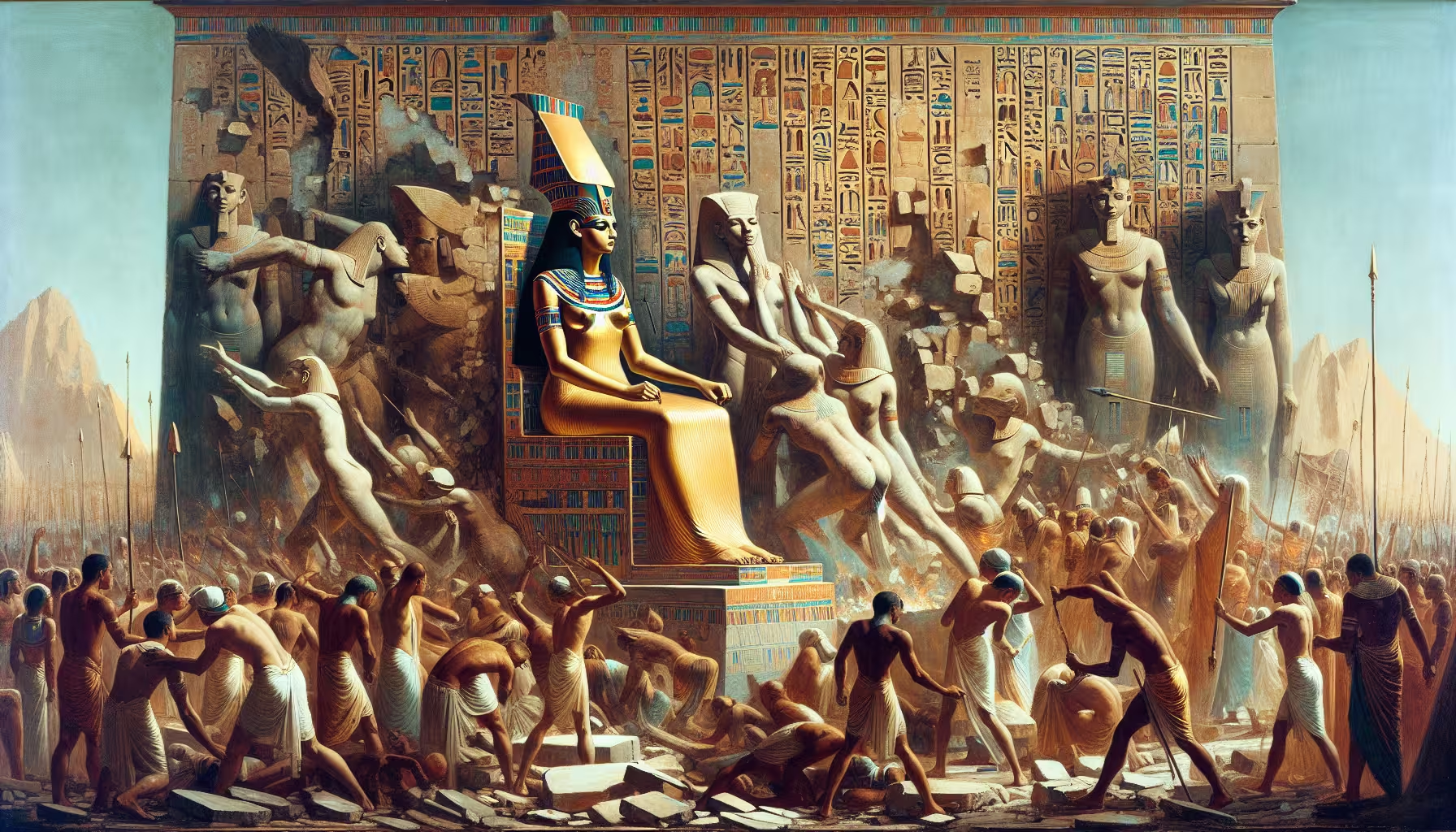
Hatshepsut was a powerful pharaoh who ruled over ancient Egypt for more than two decades, around 1479-1458 BCE. She was known for her strategic political alliances, her ambitious building projects, and her determination to be recognized as a legitimate ruler, despite the traditional male-dominated society of the time. However, upon her death, many of her monuments and statues were destroyed by her successors, most likely in an attempt to erase her from history and diminish her legacy. Despite this, Hatshepsut remains a significant and legendary figure in Egyptian history due to her remarkable achievements and the enduring mystery surrounding her death and the
Introduction
Hatshepsut, the powerful and enigmatic female pharaoh of Ancient Egypt, reigned during the 15th century BCE and left an indelible mark on history. Her rule was marked by great achievements in architecture, trade, and military conquests, earning her the admiration of her people and the envy of her successors. Despite her accomplishments, her legacy was marred by the destruction of many of her monuments and the erasure of her image from history. As Hatshepsut neared the end of her reign, tension brewed between her and her stepson and co-regent, Thutmose III. Upon her death, Thutmose III sought to erase all traces of her reign, including the destruction of her statues and the defacement of her temples. The motivations behind this act remain a subject of debate among historians, but it is believed that Thutmose III sought to eliminate any challenges to his own authority and to establish his own legacy as the rightful ruler. The destruction of Hatshepsut’s monuments marked a turning point in Egyptian history, as it represented a deliberate effort to rewrite the past and eradicate the memory of a powerful female leader. This act of erasure had far-reaching implications, as it obscured the true extent of Hatsheps
After the death of Pharaoh Hatshepsut in 1458 BCE, her monuments and statues were violently destroyed by her successors, most likely in an attempt to erase her memory from history. This included her obelisks at Karnak and the damaged remains of her mortuary temple.
The Death of an Iconic Pharaoh
Hatshepsut, the iconic female pharaoh of ancient Egypt, ruled the kingdom for over 20 years before her sudden and mysterious death. Her reign was marked by unprecedented prosperity and expansion, and she was revered as one of the most successful rulers in Egyptian history. However, her death at the age of 50 left a power vacuum in the kingdom, as her heir, Thutmose III, was still a young child. This paved the way for a tumultuous period in Egyptian history, marked by power struggles and the eventual destruction of many of Hatshepsut’s monuments.
The Destruction of Monuments
Following Hatshepsut’s death, her successor Thutmose III undertook a campaign to remove any trace of her reign from Egyptian history. Many of her monuments and statues were defaced or destroyed, and her name was systematically erased from historical records. It is believed that this campaign was an attempt to discredit Hatshepsut’s legacy and strengthen Thutmose III’s claim to the throne. However, despite these efforts, some of Hatshepsut’s monuments and inscriptions survived, and she remains a celebrated figure in modern times.
The Legacy of Hatshepsut
Despite the efforts of her successors to erase her from history, Hatshepsut’s legacy endures. She is remembered as a pioneering female ruler who defied societal norms and achieved great success as a pharaoh. Her reign marked a period of prosperity and cultural advancement in ancient Egypt, and her monuments and temples stand as a testament to her enduring legacy. While her death and the destruction of her monuments are a dark chapter in Egyptian history, Hatshepsut’s impact on the kingdom can never be erased.
Did you know that after the death of the powerful female pharaoh Hatshepsut, her monuments were destroyed and her name was erased from historical records by her successors, particularly her stepson and co-regent, Thutmose III? This was likely due to the threat her legacy posed to the traditional male rulership, as she had taken on the roles and imagery of a male pharaoh during her reign. It wasn’t until modern archaeologists uncovered evidence of her achievements and restored her name that the true extent of her reign and accomplishments were brought to light.
Read more:
egyptian-queen-hatshepsut-a-woman-rulerhatshepsut-renaissance-queen-of-ancient-egypt
hatshepsut-egypts-first-female-ruler
hatshepsut-the-female-pharaoh-ruling-alone
hatshepsut-architect-of-peace-and-prosperity
hatshepsut-egypts-successful-female-pharaoh
https://www.britannica.com/biography/Hatshepsut