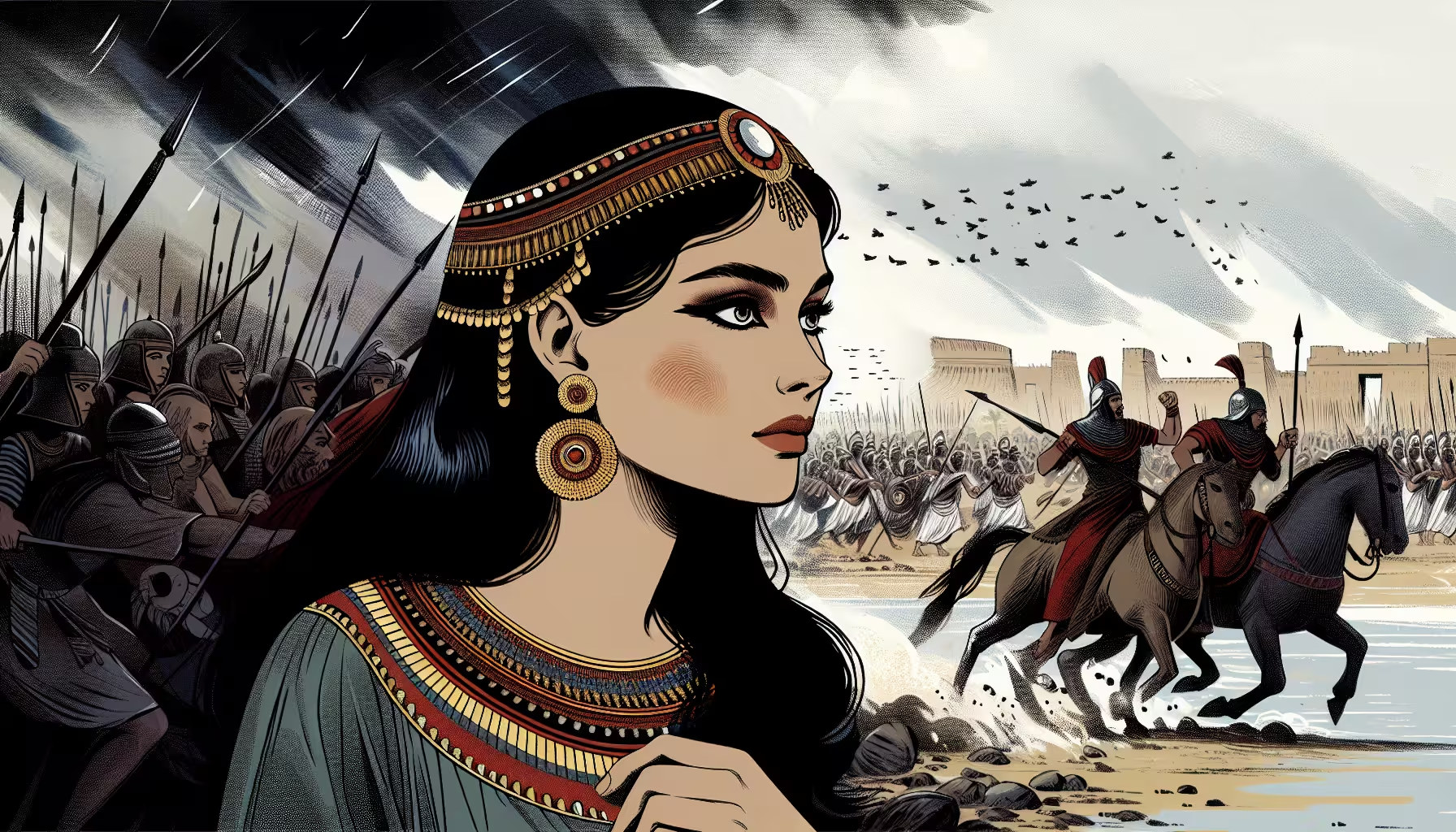
Cleopatra VII was the last active ruler of the Ptolemaic Kingdom of Egypt, known for her intelligence, charm, and strategic alliances. She famously formed a relationship with Roman general Mark Antony, which ultimately led to their defeat by Octavian at the Battle of Actium. As the Ptolemaic dynasty crumbled, Cleopatra chose to end her own life rather than face capture, marking the end of an era. Cleopatra’s story is shrouded in myth and legend, and her legacy continues to captivate historians and storytellers alike. Hook: The story of Cleopatra VII is
Introduction
Cleopatra VII, the last ruler of Egypt’s Ptolemaic dynasty, was a powerful and enigmatic figure in ancient history. Known for her intelligence, beauty, and strategic alliances, she captivated the hearts of two of the most influential men of her time, Julius Caesar and Mark Antony. As the Roman Republic descended into civil war, Cleopatra aligned herself with Caesar, bearing him a son and solidifying her position as the pharaoh of Egypt. However, after Caesar’s assassination, Cleopatra’s fortunes shifted once again. As Octavian, Caesar’s adopted heir, rose to power and sought to bring Egypt under Roman control, Cleopatra found herself facing defeat in the pivotal Battle of Actium. Despite her efforts to aid Antony, their combined forces were ultimately no match for Octavian’s superior military might. As the tide turned against them, Cleopatra and Antony were faced with the prospect of capture and humiliation. In a final act of defiance, Cleopatra chose to take her own life rather than submit to Roman rule. With her death, the Ptolemaic dynasty came to an end, and Egypt was absorbed into the Roman Empire. The fall of Cleopatra marked the end of an era and the beginning of
The Last Stand of Cleopatra VII: Defeat at the Battle of Actium As the Battle of Actium raged on, Cleopatra VII, the last active ruler of the Ptolemaic dynasty, found herself in a precarious position. Her forces, allied with Mark Antony, were facing defeat at the hands of Octavian, the future Emperor Augustus. Despite her renowned intellect and political savvy, Cleopatra’s attempts to manipulate the outcome of the battle had failed, and it seemed that she and her lover were soon to be captured by their enemy. With no hope of victory and facing the prospect of being paraded as a captive in Rome, Cleopatra took matters into her own hands. In a final act of defiance and to preserve her dignity, the queen of Egypt chose to end her life rather than submit to the authority of Octavian. In a scene that would be immortalized in art and literature for centuries to come, Cleopatra committed suicide, effectively bringing an end to the Ptolemaic dynasty that had ruled Egypt for nearly three centuries. The defeat at Actium and the subsequent death of Cleopatra brought about a seismic shift in the political landscape of the ancient world. With the demise of the Ptolemaic dynasty, Egypt was now firmly under the control of the Roman Empire. The death of Cleopatra marked the end of an era for Egypt and the beginning of a new chapter in its history under Roman rule. Despite her defeat, Cleopatra left behind a legacy that would continue to captivate the imagination of generations to come, immortalizing her as one of the most enigmatic and powerful women in history.On August 31, 30 BCE, Cleopatra VII, the last pharaoh of Egypt, and her lover Mark Antony were defeated by Octavian in the Battle of Actium. In the face of capture, Cleopatra committed suicide, effectively marking the end of the Ptolemaic dynasty.
Did you know? Cleopatra VII, the last pharaoh of Ancient Egypt, and her lover Mark Antony were defeated by Octavian in the Battle of Actium in 31 BC. Facing capture and the fall of her dynasty, Cleopatra chose to commit suicide rather than be paraded through Rome as a captive. This marked the end of the Ptolemaic dynasty and the beginning of the Roman Empire’s rule over Egypt. Cleopatra’s death is often romanticized and has been the subject of numerous historical and artistic interpretations.
Read more:
the-last-queen-of-ancient-egyptcleopatra-vii-from-education-to-empress
cleopatra-viis-alliance-with-julius-caesar
the-birth-of-caesarion-cleopatras-legacy
cleopatras-alliance-with-mark-antony-power-play
cleopatra-vii-ancient-egypts-most-influential-queen
https://www.history.com/topics/ancient-history/cleopatra