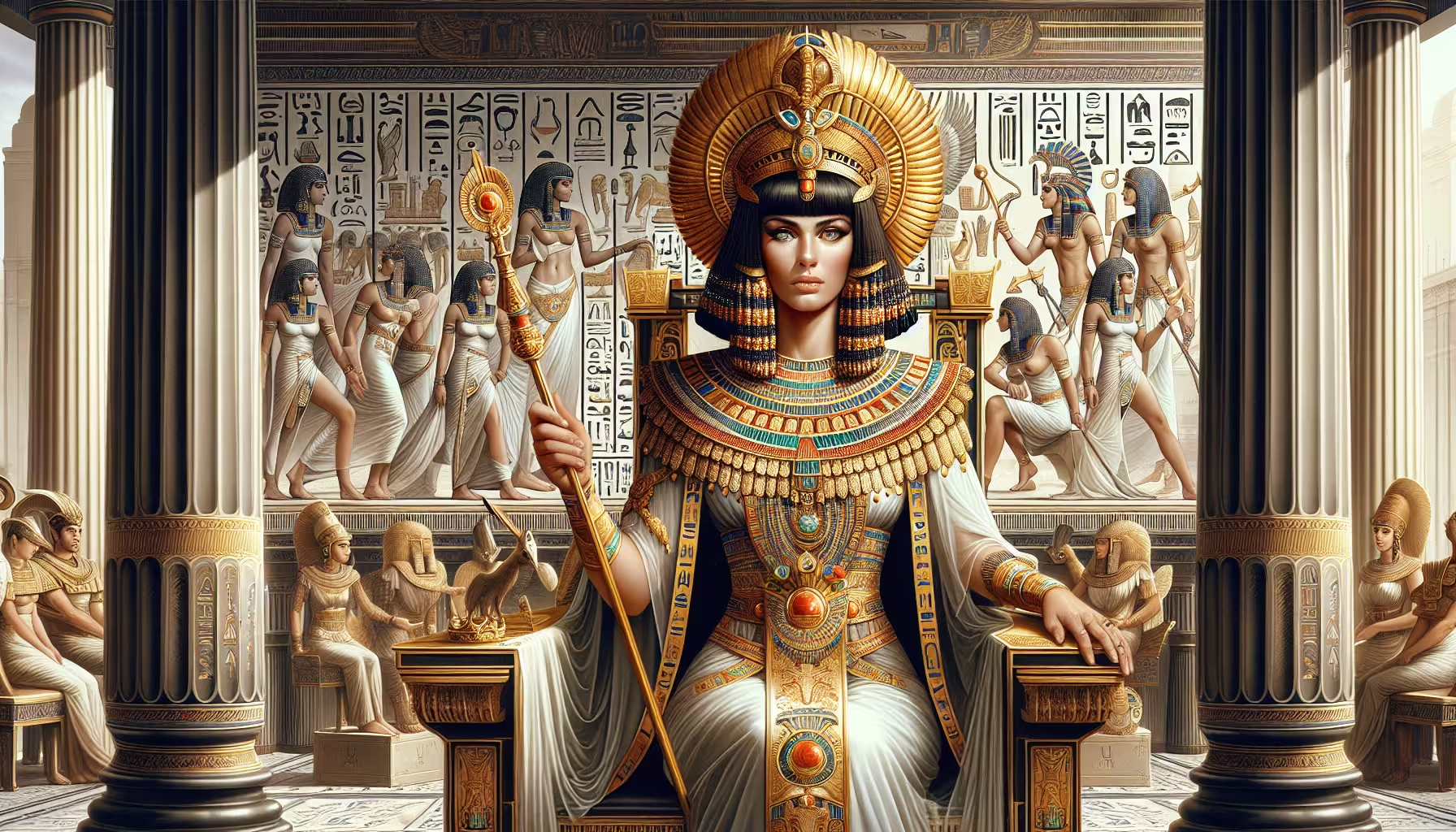
Cleopatra VII was an extraordinary figure in ancient history, known for her intelligence, charisma, and political acumen. She received a comprehensive education in languages, philosophy, and diplomacy, distinguishing herself as a formidable leader. She rose to power as co-regent with her father and later her brothers, before eventually becoming the sole ruler of Egypt. Cleopatra’s significance lies in her ability to navigate the complex political landscape of the time and maintain power in a male-dominated society. Her story is a captivating tale of ambition, power, and resilience, making her a truly legendary figure in history.
Introduction
Cleopatra VII, the last active ruler of the Ptolemaic Kingdom of Egypt, was born in 69 BC into a world of political intrigue and power struggles. As a member of the ruling Ptolemaic dynasty, Cleopatra received a comprehensive education in languages, philosophy, and diplomacy, setting her apart from other women of her time. Her intelligence and ambition were evident from a young age, and she quickly became a key figure in the political landscape of ancient Egypt. As tensions rose within her own family, Cleopatra found herself thrust into the role of co-regent with her father, Ptolemy XII, and later her brothers. Her savvy understanding of politics and diplomacy allowed her to navigate the complex power dynamics of the time, and she eventually emerged as the sole ruler of Egypt. Cleopatra’s reign was marked by her shrewd diplomatic decisions and her ability to maintain Egypt’s independence in the face of growing Roman dominance. Her relationships with influential Roman leaders, including Julius Caesar and Mark Antony, have become the stuff of legend, solidifying her place in history as one of the most captivating and enigmatic figures of antiquity. Her rule and her relationships with powerful men not only shaped the fate of Egypt but also
Cleopatra VII, born in 69 BC, received a comprehensive education in languages, philosophy, and diplomacy. She became co-regent with her father and later her brothers, eventually becoming the sole ruler of Egypt in 51 BC. This allowed her to establish herself as a powerful and influential leader in the ancient world.
Cleopatra’s Comprehensive Education
Cleopatra VII, the last active ruler of the Ptolemaic Kingdom of Egypt, received a comprehensive education in languages, philosophy, and diplomacy. Her father, Ptolemy XII, recognized the importance of a well-rounded education for his daughter, and ensured that she was well-versed in the arts and sciences. Cleopatra became fluent in multiple languages, including Egyptian, Greek, and Latin, which proved to be advantageous in her future diplomatic and political endeavors. Her thorough education laid a solid foundation for her future success as a ruler.
Rise to Co-Regency
As Cleopatra matured, she became increasingly involved in the affairs of state, ultimately becoming co-regent with her father. This early exposure to leadership and governance equipped her with the skills and knowledge necessary to effectively govern the kingdom. Through her collaboration with her father and later her brothers, Cleopatra gained invaluable experience in diplomacy and decision-making, preparing her for her eventual ascension to sole ruler of Egypt. This period of co-regency marked the beginning of Cleopatra’s rise to power and established her as a formidable and capable leader.
The Sole Ruler of Egypt
After the deaths of her father and brothers, Cleopatra assumed sole rulership of Egypt. Her comprehensive education, combined with her natural intelligence and political acumen, enabled her to effectively govern the kingdom and navigate the complex web of international relations. Cleopatra’s reign was characterized by her strategic alliances and diplomatic prowess, as she sought to consolidate and expand her power. Her ability to speak multiple languages and understand diverse cultural perspectives allowed her to forge strong alliances and maintain stability within the kingdom. Cleopatra’s education and early experiences in governance were instrumental in shaping her into one of the most influential and iconic female leaders in history.
Did you know that Cleopatra VII, the famous queen of Egypt, received a comprehensive education in languages, philosophy, and diplomacy? She became co-regent with her father, and later her brothers, before eventually becoming the sole ruler of Egypt. Her intelligence and leadership skills played a crucial role in the history of Egypt, and she is remembered as one of the most powerful and influential women of her time.
Read more:
the-last-queen-of-ancient-egyptcleopatra-viis-alliance-with-julius-caesar
the-birth-of-caesarion-cleopatras-legacy
cleopatras-alliance-with-mark-antony-power-play
the-downfall-of-cleopatra-battle-of-actium
cleopatra-vii-ancient-egypts-most-influential-queen
https://www.history.com/topics/ancient-history/cleopatra