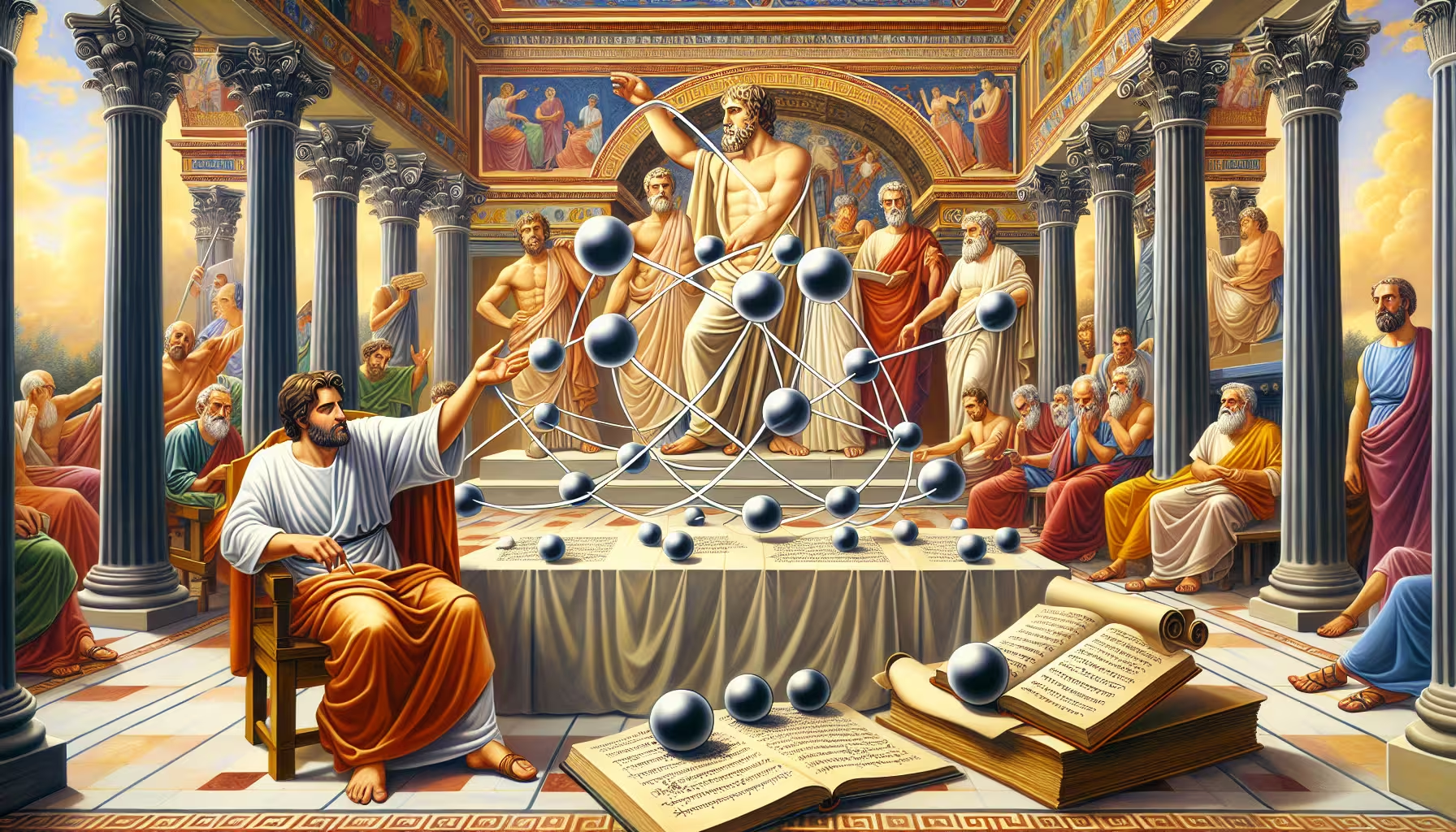
Democritus was an ancient Greek philosopher who is best known for his atomic theory, which posited that all matter is composed of tiny, indivisible particles called atoms. His philosophical ideas greatly influenced later thinkers and continue to impact scientific thought and philosophy. The significance of Democritus lies in his pioneering theories about the physical composition of the universe. In a time when most people believed in the four classical elements, Democritus proposed a revolutionary idea that matter is made up of tiny, indestructible particles. His atomic theory laid the foundation for modern chemistry and physics, and his ideas about the nature of the universe have had
Introduction
To truly understand the impact of Democritus’ atomic theory and philosophical ideas, one must delve into the life and historical significance of this ancient Greek polymath. Born in Abdera, Thrace around 460 BC, Democritus was a contemporary of Socrates and a pupil of Leucippus, the founder of atomism. Democritus was a philosopher, mathematician, and natural scientist whose ideas greatly influenced later thinkers and continue to impact scientific thought and philosophy today. His theory of atoms as the fundamental building blocks of the universe, along with his ideas about the nature of reality and the soul, laid the groundwork for the development of modern atomic theory and had a profound impact on the philosophy of science. As we explore the life and ideas of Democritus, we can begin to appreciate the enduring legacy of this ancient thinker and the lasting impact of his revolutionary ideas.
Democritus’ Revolutionary Atomic Theory As a scholar and philosopher in ancient Greece, Democritus made significant contributions to the field of science with his pioneering atomic theory. He proposed that all matter is composed of indivisible particles called atoms, which differ in shape and size and come together to form the physical world. This groundbreaking idea laid the foundation for modern atomic theory and greatly influenced later scientists such as John Dalton and Albert Einstein, who built upon his work to develop the atomic model that we know today. Furthermore, Democritus’ philosophical ideas and ethical teachings continue to impact modern thought and philosophy. He believed that the universe operates according to natural laws and that human beings are responsible for their own actions and choices. This deterministic view of the world and the emphasis on personal responsibility has had a profound impact on ethical and moral philosophy. His ideas were further developed by other prominent thinkers, such as Epicurus and Lucretius, and continue to be debated and studied by philosophers and scholars around the world. In conclusion, Democritus’ atomic theory and philosophical ideas have left a lasting legacy in the fields of science and philosophy. His revolutionary ideas about the nature of matter and the universe have shaped modern scientific thought and continue to inspire further research and exploration. Additionally, his ethical teachings have had a lasting impact on moral philosophy and continue to be studied and debated by scholars and thinkers today. Democritus’ contributions to human knowledge and understanding are truly invaluable.Democritus, an ancient Greek philosopher, was born in 460 BCE. He is best known for his atomic theory, which proposed that all matter is made up of tiny, indivisible particles called atoms. His philosophical ideas greatly influenced later thinkers and continue to impact scientific thought and philosophy.
Did you know that Democritus, a Greek philosopher who lived around 460-370 BCE, was one of the first proponents of the atomic theory? He believed that all matter is made up of tiny, indivisible particles called atoms, which move through empty space and combine to form different substances. This idea greatly influenced later thinkers, including the Roman philosopher Lucretius and the 17th-century scientist Isaac Newton, and continues to impact scientific thought and philosophy today. Democritus also made significant contributions to ethical and cosmological philosophy, exploring ideas about the nature of the universe and the meaning of life.
Read more:
democritus-the-father-of-modern-sciencedemocritus-the-father-of-atomism
democritus-father-of-the-atomic-theory
democritus-father-of-modern-atomic-theory
democritus-pioneer-of-ancient-greek-philosophy