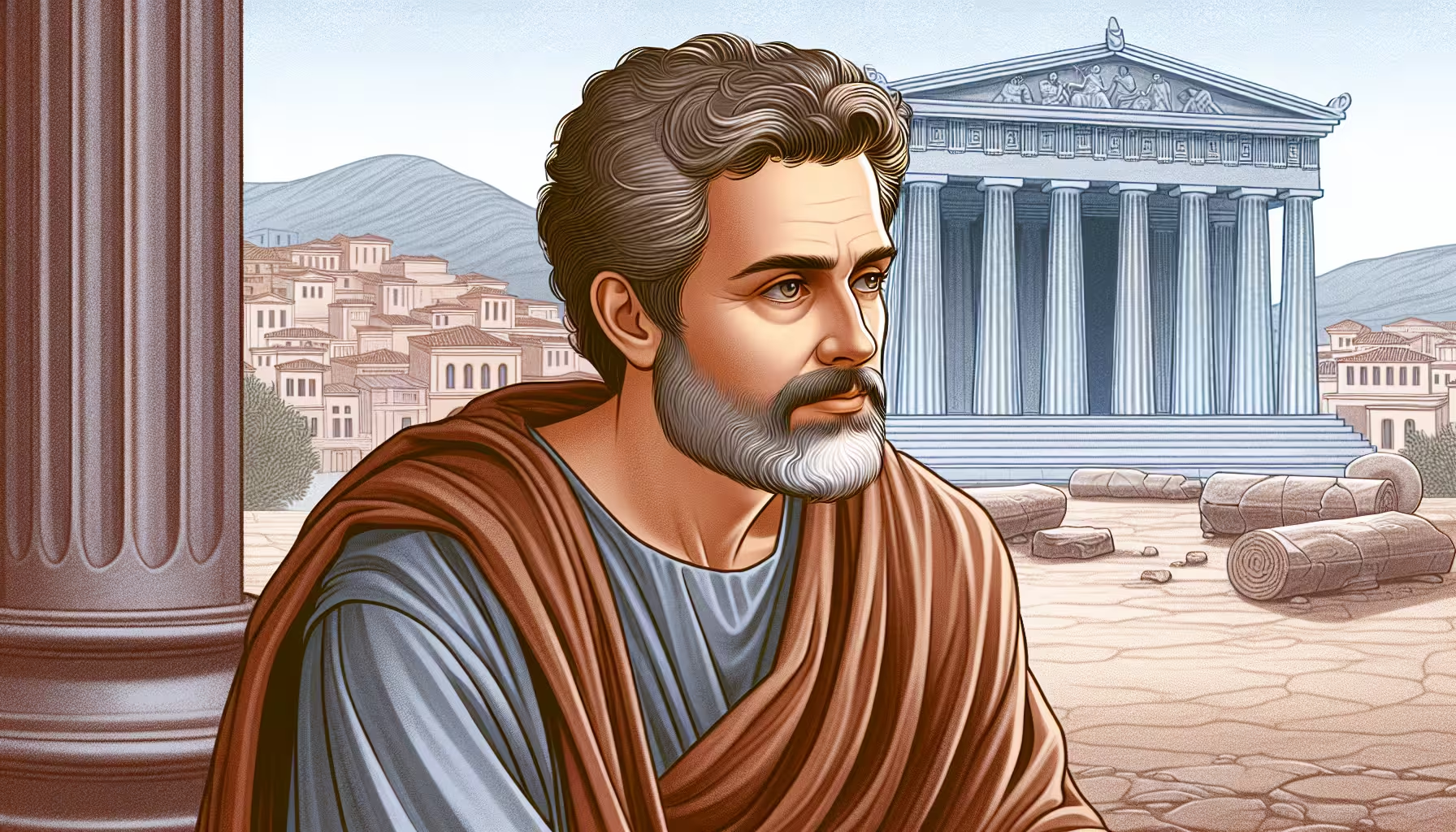
Democritus was an ancient Greek philosopher born in Abdera, Thrace (modern-day Greece) around 460 BCE. He is best known for his atomic theory, which posited that all matter is made up of tiny, indivisible particles called “atoms.” Democritus’ ideas laid the foundation for modern atomic theory and had a significant influence on the development of Western philosophy and science. His work marked a shift away from purely speculative reasoning and towards the systematic investigation of the natural world. Notably, Democritus’ ideas were often in opposition to those of his contemporary, the philosopher Heraclitus, setting the
Introduction
Imagine a world where the mysteries of the universe were thought to be unknowable, and where the concept of an indivisible, fundamental particle was unimaginable. It was in this ancient world that a brilliant mind was born in Abdera, Thrace, known today as modern-day Greece. This mind belonged to none other than the great Democritus. His revolutionary ideas would go on to challenge the established beliefs of his time and lay the foundation for modern atomic theory. Join us as we explore the life and enduring historical significance of the man whose insights have shaped our understanding of the physical world.
In 460 BCE, Democritus was born in Abdera, Thrace (modern-day Greece). He was a pre-Socratic Greek philosopher and one of the key figures in the development of atomism, the theory that all matter is made up of tiny, indivisible particles called atoms.
The Birth of a Philosopher
In the small ancient town of Abdera, Thrace, a brilliant mind was born. Democritus, the father of modern science and the atomic theory, entered the world with a thirst for knowledge that would shape the course of history. Raised in an affluent and influential family, he was afforded the opportunity to pursue his passion for understanding the natural world around him. As he grew, Democritus would go on to become one of the most significant philosophers of his time, leaving a lasting impact on the world of science and philosophy.
A Life Devoted to Knowledge
Democritus was a man of insatiable curiosity, spending his life in search of the fundamental principles of the universe. His travels took him across the ancient world, seeking out the wisdom of renowned scholars and thinkers. He studied under renowned philosophers like Leucippus and Anaxagoras, expanding his understanding of the natural world and refining his own ideas. Through his dedication to learning and relentless pursuit of truth, Democritus would develop the groundbreaking atomic theory, which posited that all matter is composed of tiny, indivisible particles called atoms.
Legacy of a Visionary
Democritus’ legacy continues to shape the way we understand the universe today. His ideas laid the foundation for modern science, influencing the work of great minds like Galileo, Newton, and Einstein. His insistence on natural explanations for the world around us and his belief in the power of human reason left an indelible mark on the history of philosophy. Democritus’ unwavering commitment to knowledge and understanding serves as an inspiration to all who seek to uncover the mysteries of the universe.
Did you know that Democritus, the ancient Greek philosopher and polymath, was born in Abdera, Thrace, which is modern-day Greece? He is best known for his atomic theory of the universe, which proposed that all matter is made up of tiny, indivisible particles called atoms. Democritus was also a prolific writer and is said to have traveled widely, studying and learning from a variety of cultures and civilizations. His ideas laid the foundation for modern scientific understanding of the physical world.
Read more:
democritus-the-father-of-atomismdemocritus-father-of-the-atomic-theory
democritus-father-of-modern-atomic-theory
democritus-pioneer-of-ancient-greek-philosophy
influential-ideas-democritus-and-atomic-theory