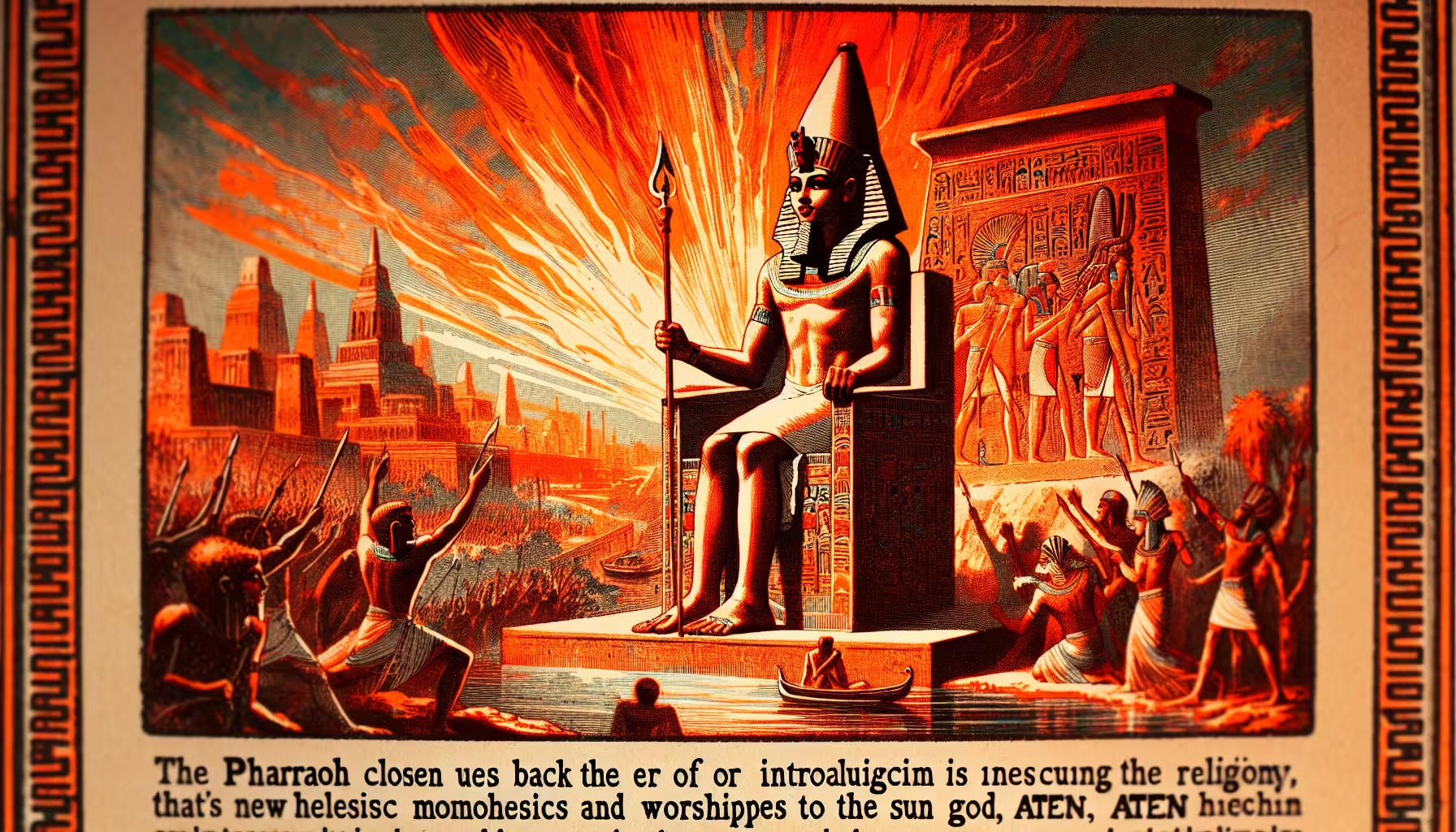
Akhenaten was an ancient Egyptian pharaoh who is renowned for introducing Atenism, a monotheistic worship of the sun god Aten, and for his radical decisions to close traditional temples and establish a new capital city called Akhetaten (modern-day Amarna). His reign marked a significant departure from traditional Egyptian religious beliefs and practices. Akhenaten’s actions had a profound impact on the religious and cultural landscape of ancient Egypt, and his legacy continues to intrigue historians and scholars to this day. His story is one of power, ambition, and the push for change in an ancient society.
Introduction
Akhenaten, also known as Amenhotep IV, was a pharaoh of Egypt who reigned during the 18th dynasty. He is perhaps best known for his radical religious reforms, which included the introduction of Atenism, a monotheistic worship of the sun god Aten. This marked a significant departure from the traditional polytheistic religion of ancient Egypt, in which multiple gods were worshipped. In a bold and unprecedented move, Akhenaten ordered the closure of traditional temples dedicated to other gods and the establishment of a new capital city called Akhetaten (modern-day Amarna). This represented a dramatic shift in religious and political power, as well as a departure from centuries of established tradition. The introduction of Atenism and the construction of Akhetaten had far-reaching historical significance, both during Akhenaten’s reign and in the broader context of ancient Egypt. These reforms have sparked years of scholarly debate and fascination, as they fundamentally altered the religious and cultural landscape of ancient Egypt. The story of Akhenaten’s radical actions and their impact on the history of Egypt is a compelling and intriguing hook that continues to captivate the imagination of historians and enthusiasts alike.
The Rise of Atenism and the New Capital City As the reign of Pharaoh Akhenaten began, he introduced a radical shift in the religious practices of ancient Egypt by promoting the worship of the sun god Aten as the supreme deity. This monotheistic belief system, known as Atenism, led to the closure of traditional temples dedicated to other gods and the establishment of a new capital city called Akhetaten, which is modern-day Amarna. This marked a significant departure from the polytheistic beliefs and practices that had been central to Egyptian society for centuries. The Monotheistic Worship of Aten and the Closure of Traditional Temples Under the influence of Pharaoh Akhenaten, the worship of the sun god Aten became the sole focus of religious devotion in ancient Egypt. This resulted in the closure of traditional temples dedicated to other gods, as the Atenist ideology sought to consolidate religious practice around the worship of Aten. As a result, the traditional priesthood and religious institutions that had previously held significant influence were disbanded, and a new religious order was established to promote the exclusive worship of Aten. The Establishment of Akhetaten as a New Capital City In addition to promoting the monotheistic worship of Aten, Pharaoh Akhenaten also sought to establish a new capital city to reflect the changes in religious and political ideology. This led to the construction of Akhetaten, which is modern-day Amarna. The city was designed to be a center for the worship of Aten and served as a symbol of the new religious and political order under Akhenaten’s rule. The establishment of Akhetaten represented a significant departure from the traditional power centers in ancient Egypt and reflected the far-reaching impact of Atenism on society and culture.In 1353 BCE, Akhenaten introduces Atenism, a monotheistic worship of the sun god Aten, and orders the closure of traditional temples. He also establishes a new capital city called Akhetaten (modern-day Amarna) to promote the worship of Aten.
Did you know that Akhenaten, an ancient Egyptian pharaoh, introduced Atenism, a monotheistic worship of the sun god Aten? This marked a significant departure from traditional Egyptian polytheism. Akhenaten also ordered the closure of traditional temples and the establishment of a new capital city called Akhetaten (modern-day Amarna) to further advance Atenism. These dramatic changes had a lasting impact on the religious and political landscape of Egypt during Akhenaten’s reign.
Read more:
amenhotep-iv-the-revolutionary-pharaoh-akhenatenakhenaten-the-revolutionary-pharaoh-of-egypt
unveiling-a-new-artistic-vision-akhenatens-revolution
akhenaten-illness-and-reversals-in-amarna
akhenaten-religious-reformer-and-artistic-visionary
https://www.britannica.com/biography/Akhenaten