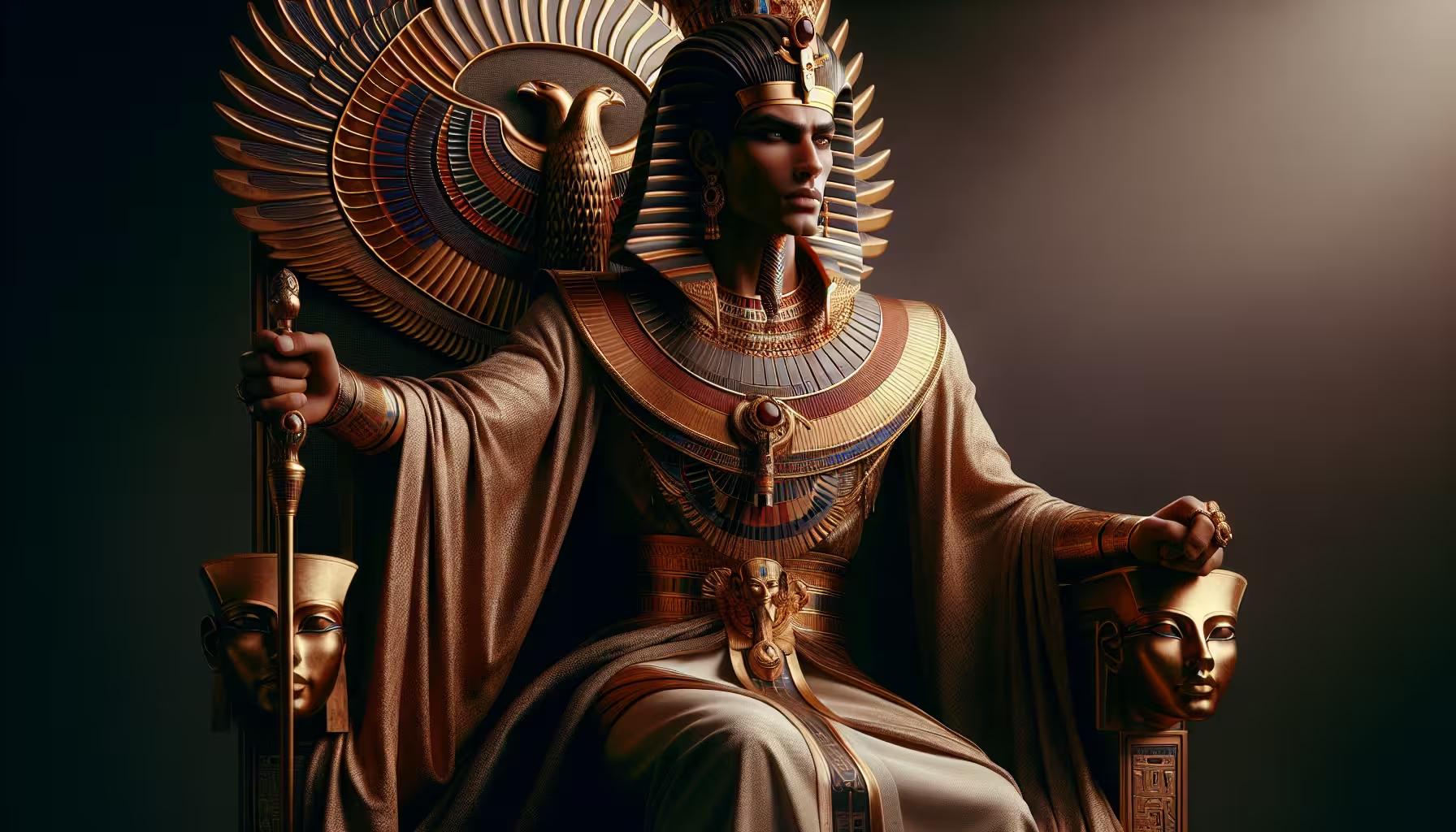
Hatshepsut was a powerful pharaoh of ancient Egypt who famously became co-regent with her stepson, Thutmose III, after the death of her husband, Thutmose II. Known for her ambitious building projects, successful trade expeditions, and her unique adoption of male attributes, Hatshepsut’s reign was groundbreaking and controversial. She is significant for being one of the few female pharaohs in Egyptian history and for defying traditional gender roles. Her story is a captivating blend of power, ambition, and intrigue, making her a legendary figure in ancient history. So, what led to this powerful and ambitious
Introduction
Hatshepsut, a powerful and influential queen of ancient Egypt, rose to prominence during a time of great political upheaval. As the daughter of Pharaoh Thutmose I, she quickly became embroiled in the complex and often treacherous world of Egyptian court politics. After the death of her husband and half-brother Thutmose II, Hatshepsut assumed the role of co-regent alongside her stepson Thutmose III. This unprecedented move shocked the traditional Egyptian society and raised many eyebrows within the royal court. The reign of Hatshepsut as co-regent with her stepson was a pivotal moment in Egyptian history, marking a shift in power dynamics and gender roles within the kingdom. Despite facing opposition and challenges from within her own family, Hatshepsut’s leadership and determination ignited a period of great prosperity and cultural advancement in ancient Egypt. This historical milestone not only shaped the future of Egypt, but it also challenged existing notions of female power and authority in a male-dominated society. The story of Hatshepsut’s co-regency is a fascinating and captivating tale of ambition, courage, and the relentless pursuit of power in a world ruled by monarchs and gods.
In 1479 BCE, Hatshepsut became co-regent with her stepson, Thutmose III, after the death of her husband, Thutmose II. As co-regent, Hatshepsut wielded great power and eventually declared herself pharaoh, becoming one of the most successful female rulers in ancient Egyptian history.
The Rise of Queen Hatshepsut
During the 15th century BC, a remarkable woman named Hatshepsut began her ascent to power in ancient Egypt. Born into a royal family, she had always demonstrated a keen intellect and a natural talent for leadership. When she married her half-brother, Thutmose II, she became the queen of Egypt and bore him a daughter. However, tragedy struck when Thutmose II died at an early age, leaving behind his young son, Thutmose III, as his heir.
A Bold Move into Co-Regency
At this challenging moment in Egyptian history, Hatshepsut made a bold decision. Instead of accommodating her stepson’s ascension to the throne, she elevated herself to the position of co-regent. In her new role, she effectively ruled alongside Thutmose III and took on the title of Pharaoh, a traditionally male designation. Undeterred by societal norms, Hatshepsut showed an unwavering determination to exercise power and maintain her influence over the kingdom.
The Legacy of a Trailblazer
Hatshepsut’s co-regency with Thutmose III proved to be a brilliant move for the stability and prosperity of Egypt. Under her rule, the kingdom experienced a period of great economic expansion and cultural advancement. She initiated impressive building projects, including the magnificent mortuary temple at Deir el-Bahri, and promoted trade with other nations. Ultimately, Hatshepsut’s bold actions as co-regent paved the way for her to become the first female pharaoh in the history of ancient Egypt, leaving a lasting legacy as a trailblazer for women in leadership roles.
Did you know? Hatshepsut became co-regent with her stepson, Thutmose III, around 1473 BC. After her husband, Thutmose II, died, Hatshepsut took on the role of regent for her young stepson. Eventually, she declared herself pharaoh and ruled alongside Thutmose III, effectively becoming the first female pharaoh in history. This period of co-regency marked a significant shift in power dynamics in ancient Egypt and set the stage for Hatshepsut’s remarkable reign.
Read more:
egyptian-queen-hatshepsut-a-woman-rulerhatshepsut-renaissance-queen-of-ancient-egypt
hatshepsut-the-female-pharaoh-ruling-alone
hatshepsut-architect-of-peace-and-prosperity
hatshepsut-death-and-monumental-destruction
hatshepsut-egypts-successful-female-pharaoh