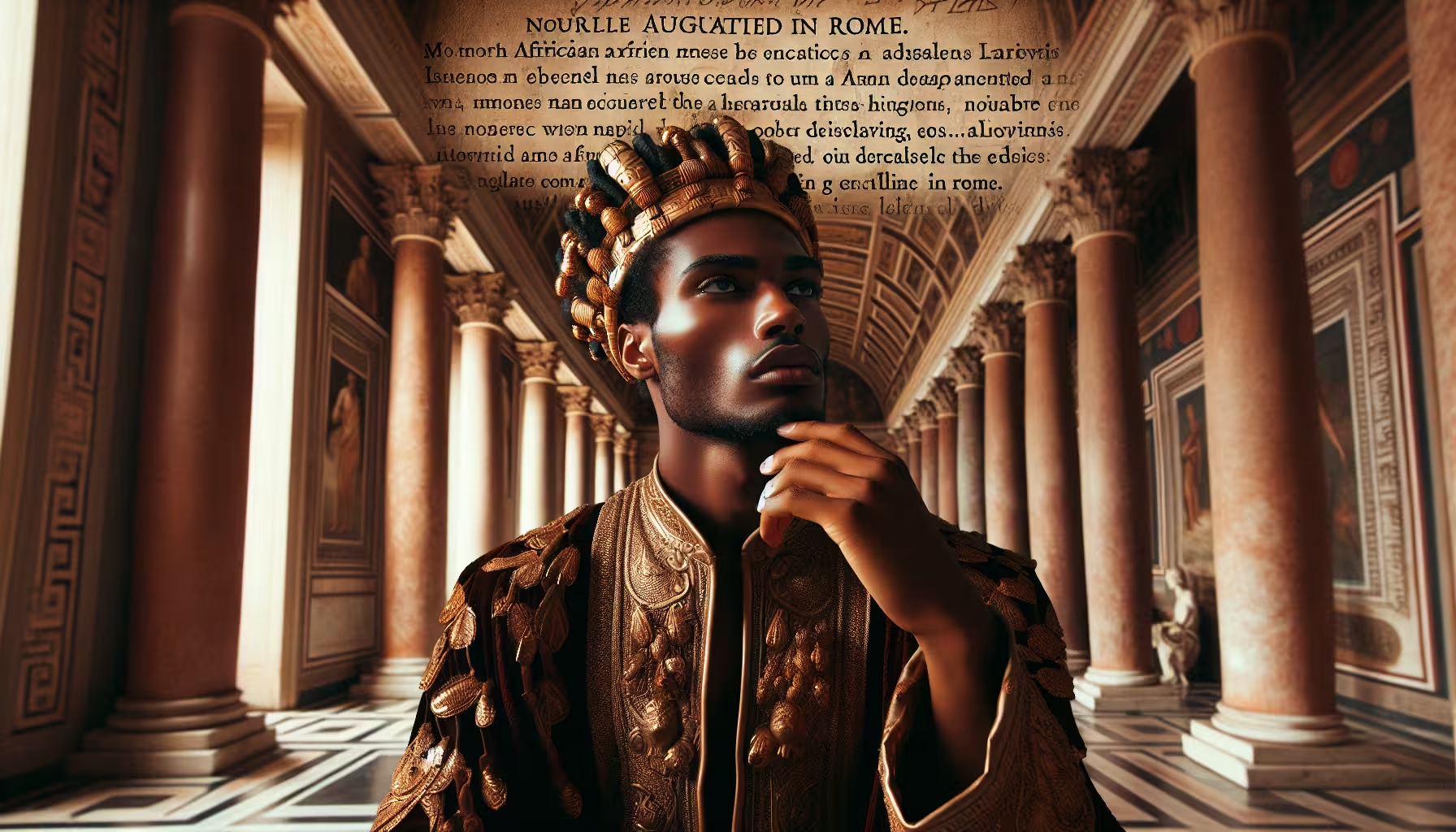
Juba II was a significant historical figure due to his unique background and influence. Born in North Africa around 50 BCE, Juba was educated in Rome under the tutelage of Emperor Augustus. He later returned to North Africa and became the king of Mauretania, where he played a crucial role in Roman relations with the region. Juba II is legendary for his intellectual pursuits, his diplomatic skills, and his contributions to the literary and scientific world. His life story is a fascinating intersection of ancient cultures and power dynamics. What can we learn from this legendary figure who straddled two vastly different worlds?
Introduction
Juba II, the son of Juba I, the king of Numidia, lived during a tumultuous time in Roman history. After the defeat of his father, Juba II was taken to Rome as a captive and received his education under the tutelage of Augustus, the powerful Roman Emperor. This period of learning and cultural exchange in the heart of the Roman Empire had a profound impact on Juba II, shaping his worldview and future pursuits. The historical significance of Juba II’s education in Rome cannot be overstated, as it not only reflects the complex interactions between the Roman Empire and its conquered territories, but also sheds light on the intellectual and cultural legacy of a fascinating figure who would go on to become a significant ruler in his own right. The story of Juba II’s education in Rome is a captivating tale of resilience, diplomacy, and the enduring influence of ancient civilizations.
Juba II, a prince from Numidia, received his education in Rome under the tutelage of Augustus in 30 BCE. His upbringing in the Roman court would later influence his tenure as king of Mauretania and his role as a mediator between the Romans and the indigenous peoples of North Africa.
Received education in Rome under the tutelage of Augustus
During the reign of Augustus, the young prince Juba II of Mauretania was sent to Rome to receive his education under the careful tutelage of the revered emperor. Under Augustus’ guidance, Juba II was exposed to the finest education that Rome had to offer. He was immersed in the study of philosophy, literature, and the arts, and his time in Rome undoubtedly shaped his intellectual development and worldview.
Embracing the Roman way of life
While in Rome, Juba II not only gained knowledge and wisdom from his studies, but he also immersed himself in the cultural and social life of the city. He became fluent in Latin and Greek, and was known for his love of learning and intellectual pursuits. Juba II also developed a deep appreciation for Roman customs and traditions, and his time in Rome undoubtedly played a significant role in shaping his identity as a ruler and philosopher.
Legacy of a learned prince
Juba II’s education in Rome under the guidance of Augustus had a profound impact on his later life and reign. His intellectual pursuits and deep understanding of Roman culture and philosophy undoubtedly influenced his policies as a ruler, and he was known for his commitment to promoting learning and knowledge within his kingdom. Juba II’s legacy as a learned prince and philosopher-king can be traced back to his formative years in Rome, where he gained the knowledge and wisdom that would shape his reign and leave a lasting impact on history.
Did you know that Juba II, a prince from the North African kingdom of Numidia, received his education in Rome under the tutelage of Augustus? This unique opportunity allowed Juba II to gain a deep understanding of Roman culture and politics, making him one of the few non-Romans to be educated in such a way. This education played a crucial role in shaping Juba II’s views and policies as the eventual ruler of Mauretania.
Read more:
moroccanborn-king-juba-ii-a-rulers-journeyjuba-ii-coruler-of-numidia
juba-ii-scholar-philosopher-patron-of-arts
juba-iis-arabian-expedition-with-aelius-gallus
juba-ii-founding-caesaria-in-mauretania
juba-ii-legacy-of-mauretanian-cultural-advancement