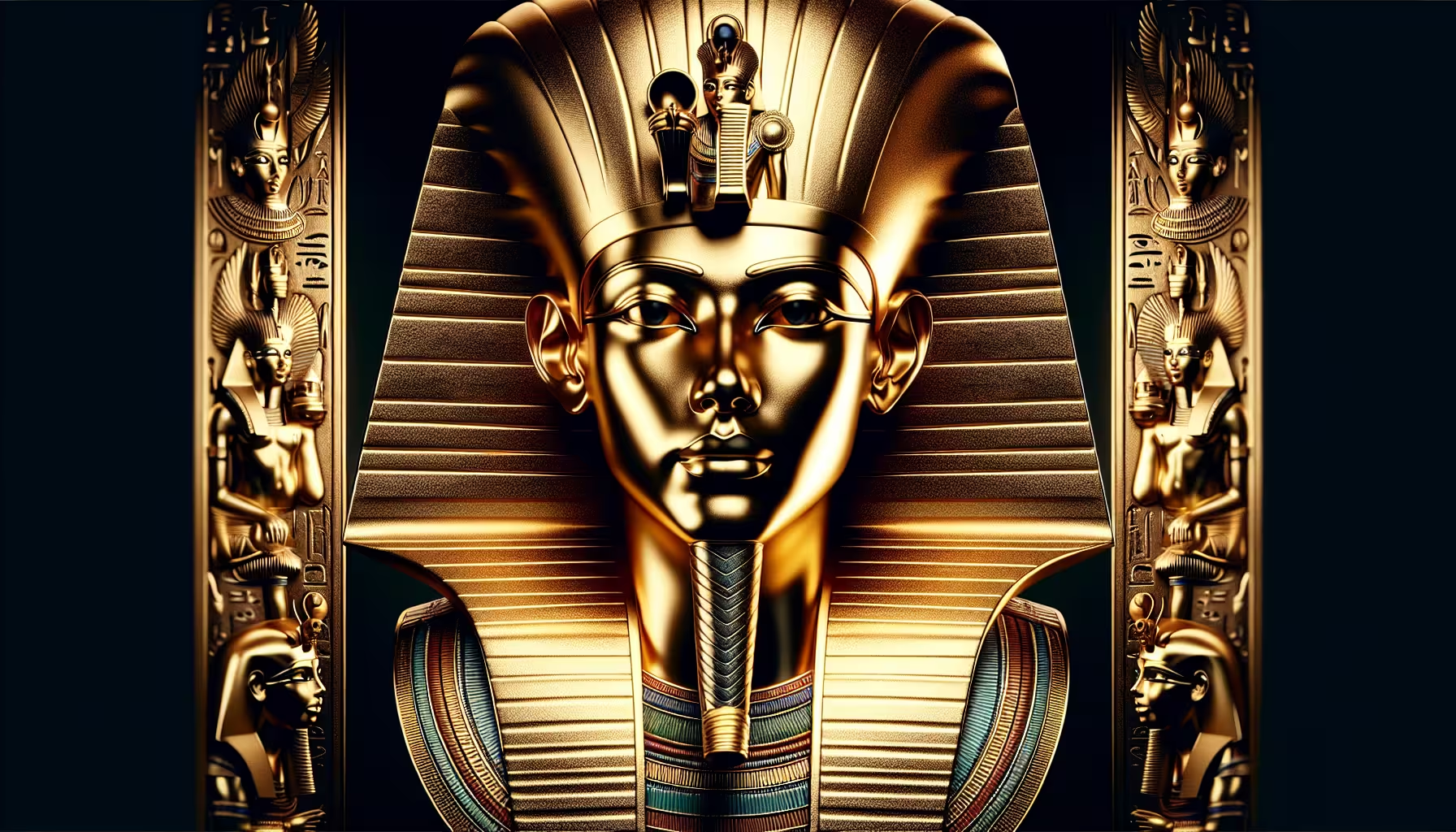
Tutankhamun, also known as King Tut, was an ancient Egyptian pharaoh who reigned during the 18th dynasty. He is significant and legendary because of the discovery of his nearly intact tomb in the Valley of the Kings in 1922 by Howard Carter. The treasures and artifacts found in his tomb provided a wealth of information about ancient Egyptian culture and have captivated the world ever since. Despite his short reign and relatively unremarkable accomplishments, the mystery and intrigue surrounding King Tutankhamun continue to capture the imagination of historians, archaeologists, and the public alike.
Introduction
Imagine the opulence and power of the ancient Egyptian empire in the 18th dynasty. It was during this illustrious era that a remarkable figure was born, destined to leave an indelible mark on history. Tutankhamun, the boy king, came into the world during a time of great political and social upheaval in ancient Egypt. His reign, though brief, would become the stuff of legend, fascinating historians and captivating the imagination of people around the world. Tutankhamun’s life and reign are shrouded in mystery, making his story all the more intriguing and captivating for those seeking to unravel the secrets of ancient Egypt. This enigmatic figure’s historical significance cannot be overstated, as he has left behind a legacy that continues to capture our curiosity and inspire countless works of art, literature, and scholarship. Join us on a journey back in time as we explore the life and times of Egypt’s legendary pharaoh, Tutankhamun.
Tutankhamun, originally named Tutankhaten, was born in 1341 BC during the 18th dynasty of ancient Egypt. He was the son of the controversial pharaoh Akhenaten and is best known for his intact tomb, which was discovered by Howard Carter in 1922.
The Birth of a Pharaoh
Tutankhamun, the future ruler of ancient Egypt, was born during the 18th dynasty, a time of great significance in Egyptian history. His parents were believed to be the Pharaoh Akhenaten and one of his secondary wives, although there is some debate among historians about their exact identities. As a young prince, Tutankhamun was raised in the royal palace, surrounded by the opulence and grandeur of the ancient Egyptian court. It was clear from a young age that he was being groomed for a position of immense power and responsibility.
A Challenging Childhood
Despite his royal lineage, Tutankhamun’s early years were marked by both privilege and adversity. His father, Akhenaten, was a controversial figure who sought to transform Egypt’s religious and political landscape by promoting the worship of Aten, the sun god, and moving the capital to a new city. These radical changes were met with resistance from the powerful priesthood and nobility, and the young prince likely witnessed the turmoil and uncertainty of this tumultuous period. When his father died, Tutankhamun ascended to the throne at the tender age of nine, facing the daunting task of stabilizing the kingdom and restoring the traditional religious practices.
The Legacy of a Pharaoh
Tutankhamun’s reign was relatively short, but it left an indelible mark on ancient Egypt. He is best known for his lavish burial tomb, which was discovered nearly intact by archaeologist Howard Carter in 1922. The artifacts and treasures found within the tomb provided invaluable insights into the art, culture, and religious beliefs of ancient Egypt, and sparked a worldwide fascination with Tutankhamun and his era. Despite the brevity of his rule, Tutankhamun’s legacy endures as a symbol of the splendor and mystery of ancient Egypt, captivating the imaginations of people across the globe.
Did you know? Tutankhamun, also known as King Tut, was born in the 18th dynasty of ancient Egypt. He became pharaoh at a young age and is famous for his intact tomb, which was discovered in 1922 by archaeologist Howard Carter. The treasures found in his tomb have provided valuable insights into ancient Egyptian history and culture. Despite his short reign, King Tutankhamun has left an enduring legacy in the world of archaeology and Egyptology.
Read more:
tutankhamuns-royal-court-education-religion-warfare-statecraftthe-boy-king-tutankhamun-egypts-youngest-pharaoh
tutankhamun-restoring-egypts-traditional-religion
tutankhamun-mysterious-death-of-a-pharaoh
tutankhamuns-tomb-discovery-ignites-egyptology-craze
tutankhamuns-tomb-unearthing-ancient-treasures
tutankhamuns-iconic-artifacts-continuing-legacy
https://www.discoveringegypt.com/tutankhamun/