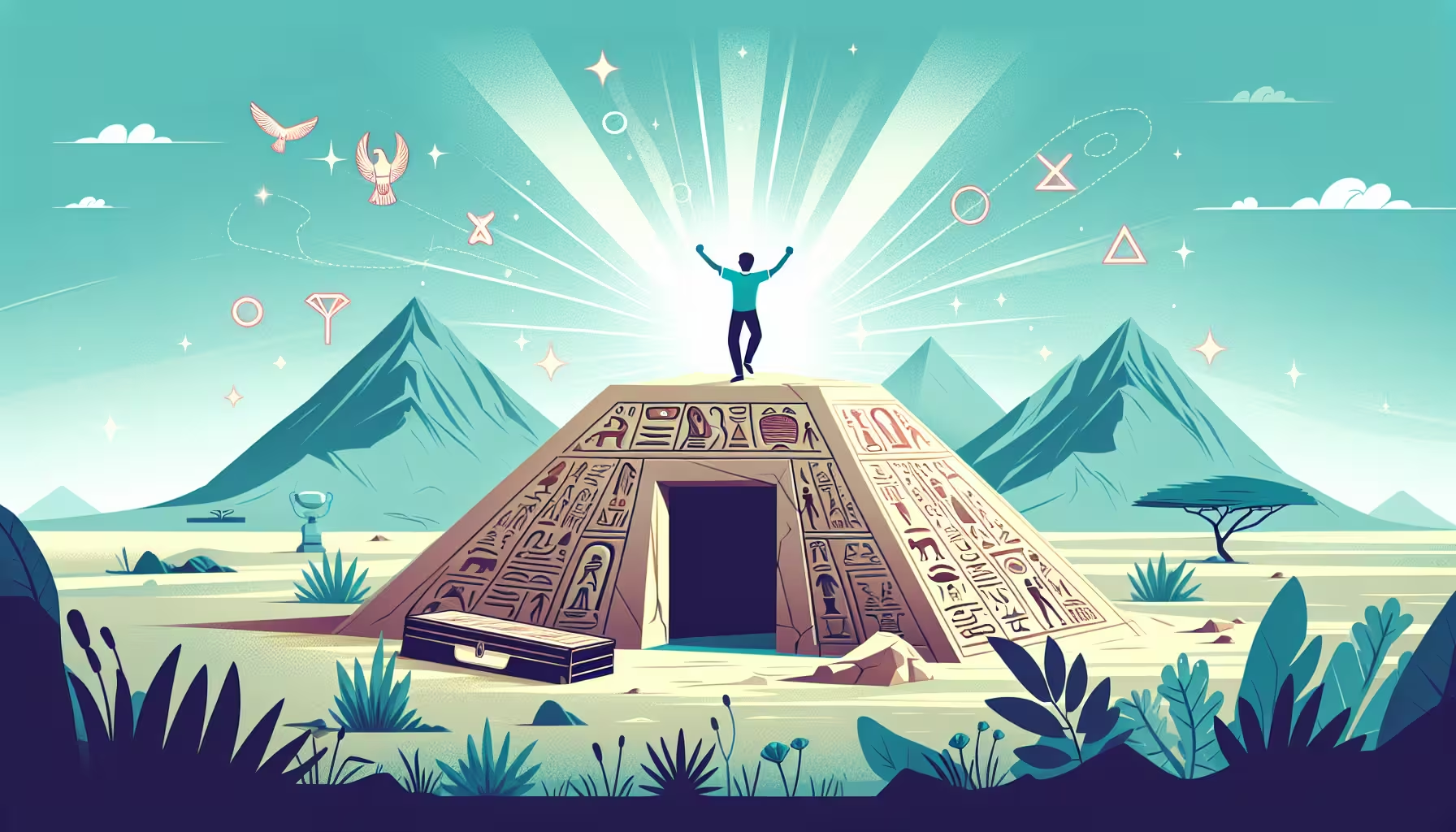
Tutankhamun was an ancient Egyptian pharaoh who reigned during the 14th century BC, and is best known for the discovery of his intact tomb in the Valley of the Kings by the British archaeologist Howard Carter in 1922. This discovery sparked global interest in Egyptology and captivated the world with its treasures and mysteries. Tutankhamun’s significance lies in the fact that his tomb was one of the few to be found virtually untouched by grave robbers, providing invaluable insights into ancient Egyptian culture, art, and burial practices. The treasures found within the tomb, including the iconic golden mask of the ph
Introduction
In November 1922, British archaeologist Howard Carter made a discovery that would capture the world’s imagination and forever change the field of Egyptology. The Valley of the Kings, a burial ground for Egypt’s ancient pharaohs, had already yielded a number of remarkable finds, but none would captivate the public quite like the intact tomb of the young pharaoh Tutankhamun. Tutankhamun, who reigned during the 18th dynasty of ancient Egypt, was a relatively minor figure in the grand scheme of pharaonic history. He ascended to the throne at a young age and died unexpectedly, leaving behind a legacy shrouded in mystery. For centuries, his name had largely faded into obscurity, overshadowed by the more influential rulers of Egypt’s past. However, Carter’s discovery would change all that. When he opened the doors to Tutankhamun’s tomb, he uncovered a treasure trove of priceless artifacts, including intricately carved furniture, golden jewelry, and the iconic golden death mask that would become synonymous with the young pharaoh. It was a find of unprecedented magnitude, a glimpse into the opulence and artistry of ancient Egypt at its zenith. The discovery of Tutankhamun’s tomb sparked a global fascination with
On November 4, 1922, British archaeologist Howard Carter discovered the intact tomb of the young Egyptian pharaoh Tutankhamun in the Valley of the Kings. The discovery sparked global interest in Egyptology and revealed a treasure trove of artifacts from the 14th century BC, shedding light on the ancient Egyptian civilization.
The Discovery of Tutankhamun’s Intact Tomb
In the year 1922, Howard Carter, a British archaeologist, made an extraordinary discovery in the Valley of the Kings in Egypt. After years of meticulous excavation work, Carter and his team stumbled upon the intact tomb of a young pharaoh, who was later revealed to be the boy king, Tutankhamun. Encased in a series of inner coffins, the tomb contained a treasure trove of priceless artifacts, including jewelry, chariots, and golden statues. This monumental find sparked a global interest in Egyptology, as it provided an unprecedented glimpse into the life and afterlife of an ancient ruler.
The Mystery of the Boy King
Tutankhamun, a relatively obscure figure in ancient Egyptian history, became a household name overnight after the discovery of his tomb. Not much was known about this enigmatic pharaoh, as his reign was brief and largely overshadowed by the rule of his predecessors. However, the intricate carvings and artifacts found within his tomb provided insights into his life, his family, and his divinely ordained role as the ruler of Egypt. The elaborate burial rituals and the lavish treasures also shed light on the beliefs and practices of the ancient Egyptians regarding the afterlife.
A Legacy Unearthed
The unearthing of Tutankhamun’s intact tomb was a watershed moment in the field of Egyptology, as it sparked a renewed interest in the study of ancient Egyptian history and culture. The artifacts found within the tomb not only provided valuable historical and archaeological insights but also captured the imagination of people around the world. The breathtaking beauty and intricate craftsmanship of the treasures found within the tomb served as a testament to the ingenuity and artistry of the ancient Egyptians. Today, the legacy of Tutankhamun lives on as his artifacts continue to be studied and admired, offering a tantalizing glimpse into the opulence and mystique of an ancient civilization.
Did you know? In 1922, archaeologist Howard Carter made an incredible discovery in the Valley of the Kings in Egypt. He uncovered the intact tomb of Tutankhamun, a relatively unknown pharaoh from the 18th dynasty. This discovery sparked global interest in Egyptology and captivated the world with its treasures. The tomb contained a stunning array of artifacts, including the famous golden burial mask of Tutankhamun. The event brought attention to the mysteries of ancient Egypt and opened up new avenues of study for historians and archaeologists.
Read more:
tutankhamun-prince-of-ancient-egypts-18th-dynastytutankhamuns-royal-court-education-religion-warfare-statecraft
the-boy-king-tutankhamun-egypts-youngest-pharaoh
tutankhamun-restoring-egypts-traditional-religion
tutankhamun-mysterious-death-of-a-pharaoh
tutankhamuns-tomb-unearthing-ancient-treasures
tutankhamuns-iconic-artifacts-continuing-legacy
https://www.history.com/topics/ancient-history/tutankhamen