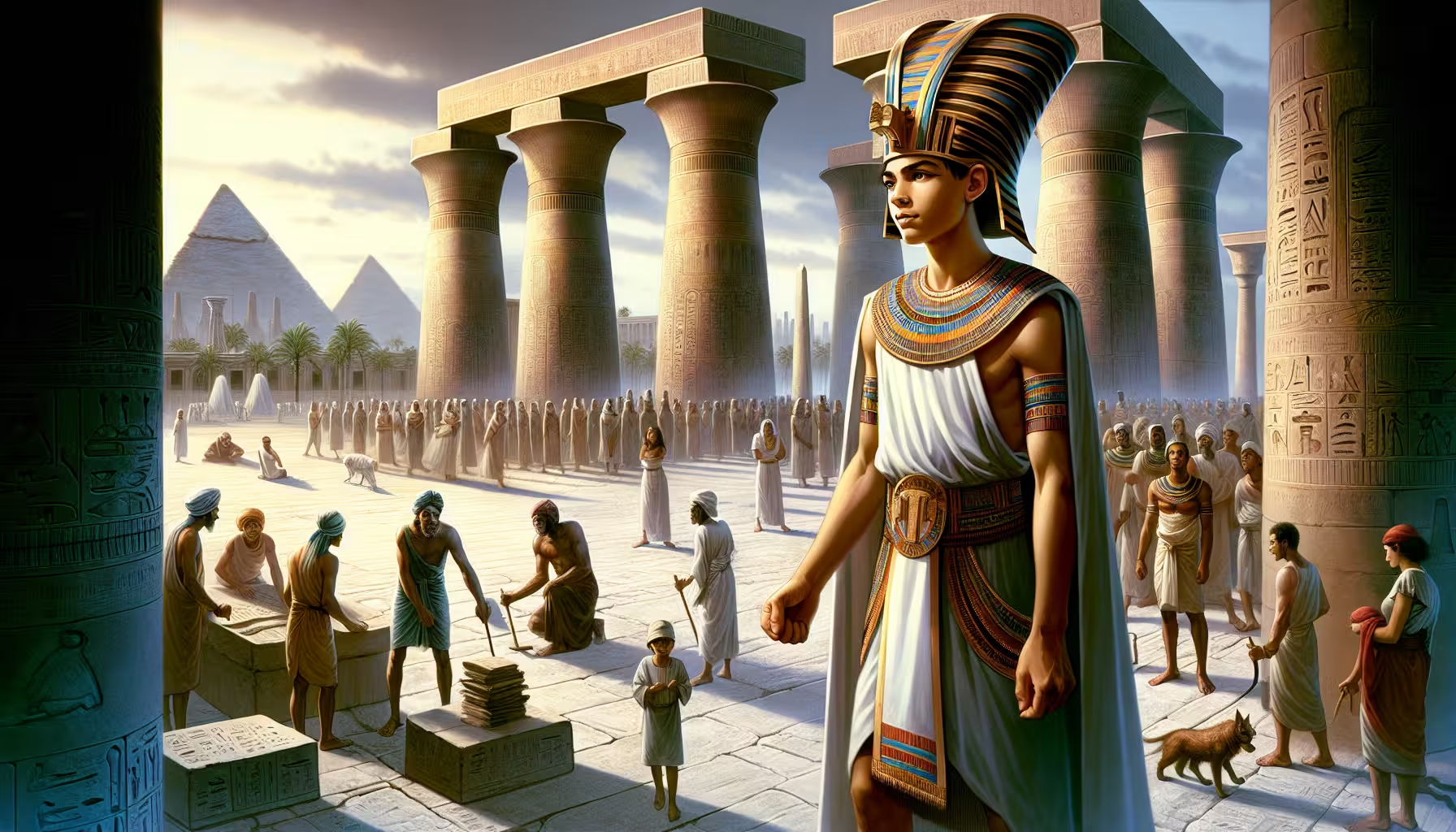
Tutankhamun, also known as the “Boy King,” was a legendary figure in ancient Egyptian history who reigned as pharaoh during the 18th dynasty. Despite his short reign, Tutankhamun oversaw the restoration of traditional Egyptian religion and the construction of several monuments, including the completion of his own tomb which was discovered nearly intact in the 1920s, making him one of the most famous pharaohs in history. Tutankhamun’s significance lies in his role in reviving the traditional religious practices and monuments of ancient Egypt, as well as the mystery and intrigue surrounding his tomb and its contents
Introduction
Tutankhamun, the boy king of ancient Egypt, ascended to the throne at a young age during a time of great upheaval and uncertainty. His reign came at a pivotal moment in Egyptian history, as the traditional religious practices and monuments of the land were under threat from the previous pharaoh’s attempts to introduce a new monotheistic religion. Tutankhamun’s accession to the throne marked a turning point, as he oversaw the restoration of traditional Egyptian religion and the construction of several monuments dedicated to the ancient gods. This period of restoration was not only significant for the preservation of Egypt’s cultural heritage, but it also had far-reaching implications for the future of the kingdom. Join us as we delve into the life of Tutankhamun and explore the historical significance of his efforts to uphold Egypt’s traditional beliefs.
In 1333 BC, Tutankhamun oversaw the restoration of traditional Egyptian religion and the construction of several monuments, marking a return to the worship of the old gods and the revitalization of Egyptian culture.
Tutankhamun restores traditional Egyptian religion
During his reign, Tutankhamun played a crucial role in the reestablishment of traditional Egyptian religion. He actively sought to undo the radical reforms implemented by his predecessor, Akhenaten, who had attempted to steer Egypt towards monotheism. Tutankhamun oversaw the reopening of temples and the restoration of religious practices that had been abandoned during the Amarna period. He also reinstated the worship of the god Amun, who had been marginalized under Akhenaten’s rule. Tutankhamun’s efforts to revive the ancient Egyptian pantheon were met with fervent support from the priesthood and the populace, ultimately solidifying his legacy as a champion of Egypt’s traditional religion.
Monument construction under Tutankhamun’s rule
One of the most enduring legacies of Tutankhamun’s reign was the construction of several monumental structures. These included grand temples dedicated to the gods and lavish tombs for the royal family. Tutankhamun’s own resting place, famously discovered in the Valley of the Kings, stands as a testament to the opulence and architectural prowess of his era. In addition to his efforts in religious restoration, Tutankhamun’s commitment to building enduring monuments further solidified his reputation as a strong and influential ruler who sought to leave a lasting mark on ancient Egyptian history.
Tutankhamun’s lasting impact on ancient Egyptian history
Tutankhamun’s reign, though brief, had a lasting impact on ancient Egyptian history. His commitment to restoring traditional religious practices and dedication to architectural construction helped strengthen the foundations of Egypt’s cultural identity. Despite his untimely death at a young age, Tutankhamun’s legacy endures through the monuments and religious practices he reinstated during his reign, and his influence can still be felt in Egypt’s historical and archaeological landscape to this day.
Did you know that Tutankhamun oversaw the restoration of traditional Egyptian religion and the construction of several monuments during his reign as Pharaoh? Despite his short reign, he made significant efforts to return Egypt to its traditional religious practices and built several monuments to honor the gods. Tutankhamun’s efforts played a crucial role in preserving Egypt’s cultural and religious heritage.
Read more:
tutankhamun-prince-of-ancient-egypts-18th-dynastytutankhamuns-royal-court-education-religion-warfare-statecraft
the-boy-king-tutankhamun-egypts-youngest-pharaoh
tutankhamun-mysterious-death-of-a-pharaoh
tutankhamuns-tomb-discovery-ignites-egyptology-craze
tutankhamuns-tomb-unearthing-ancient-treasures
tutankhamuns-iconic-artifacts-continuing-legacy
https://www.history.com/topics/ancient-history/tutankhamen