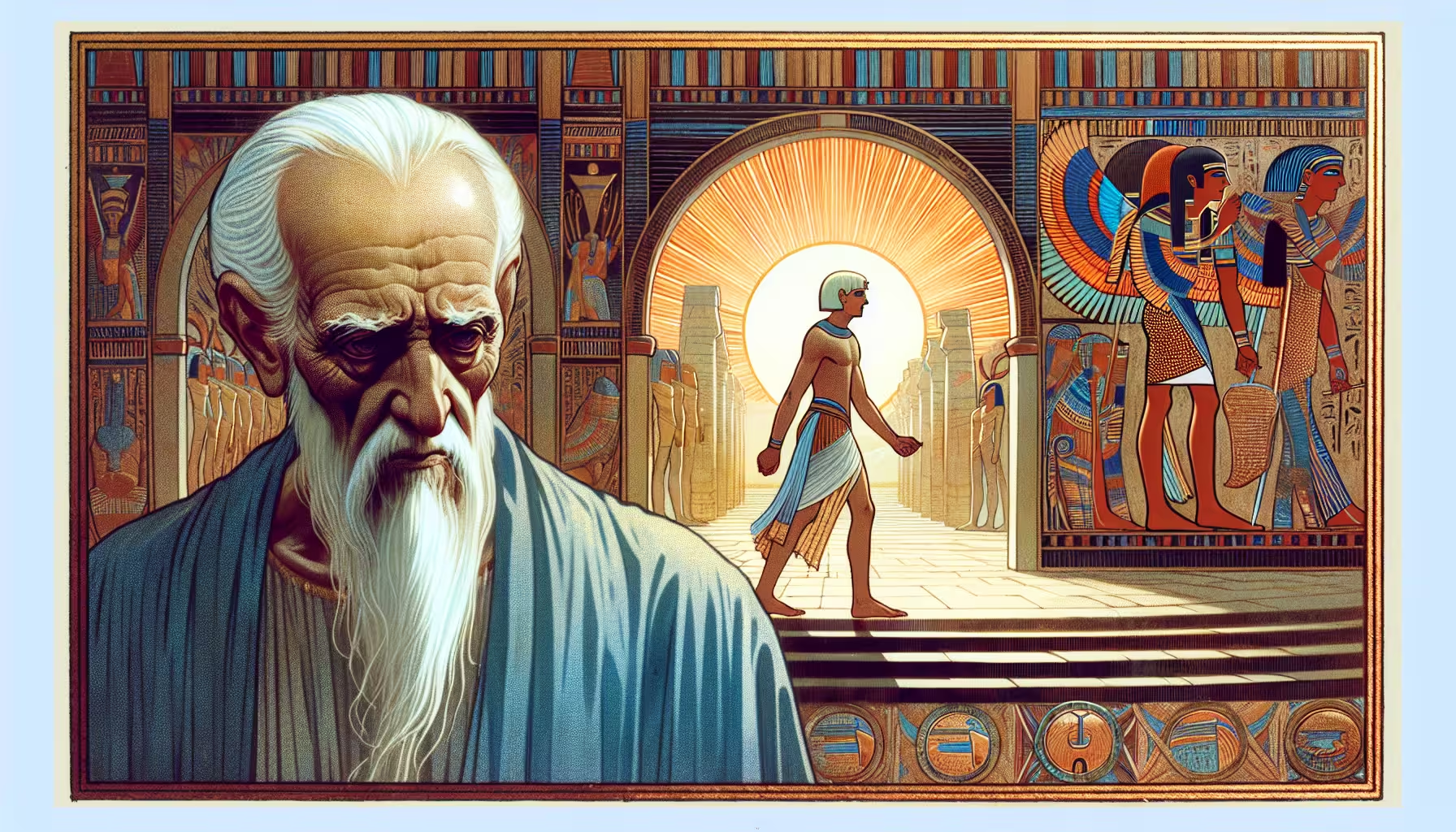
Akhenaten was a pharaoh of ancient Egypt who is best known for his radical religious reforms. He ruled during the 18th dynasty and is often referred to as the “heretic king” due to his attempts to transition Egypt from polytheism to a monotheistic religion centered around the worship of the sun god, Aten. Akhenaten’s rule was marked by significant changes in art, architecture, and religious practice, with a focus on a more personal and accessible form of worship. However, after his death, his son Tutankhaten, who later became known as Tutankhamun, reversed many of his
Introduction
In the ancient city of Amarna, a pivotal moment was on the horizon. Akhenaten, the enigmatic pharaoh known for his radical religious reforms and the establishment of a new capital, was nearing the end of his life. Rumors of illness had spread throughout the kingdom, and the fate of the Egyptian empire hung in the balance. As Akhenaten’s health deteriorated, his son Tutankhaten, who would later be known as Tutankhamun, stood on the brink of assuming the throne. Akhenaten’s reign had been marked by unprecedented changes, as he sought to upend centuries of tradition by promoting the worship of the sun god, Aten, to the exclusion of other deities. His religious fervor had led to the abandonment of traditional temples and the construction of a new city, Amarna, dedicated to his new god. The radical nature of his reforms had sparked controversy and division within Egyptian society, and his impending death only heightened the uncertainty surrounding the future of the kingdom. As Tutankhaten ascended to the throne, he faced the daunting task of navigating the aftermath of his father’s tumultuous reign. With the weight of history and the expectations of his people resting on his shoulders, Tutankhamun would go on
Akhenaten, the 18th dynasty pharaoh of Egypt, died in Amarna around 1336 BC, possibly as a result of an illness. His son, Tutankhaten, later known as Tutankhamun, became pharaoh and reversed many of Akhenaten’s religious and political reforms.
The Mysterious Death of Akhenaten
One of the most enigmatic and controversial pharaohs of ancient Egypt, Akhenaten, met his untimely demise in the city of Amarna. Although the exact cause of his death remains a subject of speculation, many historians believe that he may have succumbed to an illness. Akhenaten was known for his radical religious reforms, including the introduction of the worship of the sun disc Aten as the sole deity, which sparked resistance among the priesthood and nobility. His death marked the end of an era and paved the way for his son, Tutankhaten, to ascend to the throne.
The Rise of Tutankhamun and the Reversal of Reforms
Following the death of his father, Tutankhaten took on the throne and changed his name to Tutankhamun. Under his rule, he sought to reverse many of the reforms initiated by Akhenaten. Tutankhamun reinstated the traditional polytheistic religion, centered around the worship of Amun, and relocated the capital back to Thebes. The reign of Tutankhamun was marked by a return to the religious and political norms of the pre-Akhenaten era, as he sought to undo the radical changes implemented by his father.
The Legacy of Akhenaten
Despite the efforts of Tutankhamun to erase the legacy of Akhenaten, the pharaoh’s reign left a lasting impact on the history of ancient Egypt. Akhenaten’s religious revolution shattered the established beliefs and practices, and his city of Amarna stood as a symbol of this revolutionary period. Although Akhenaten’s reign was short-lived and his reforms were eventually overturned, his radical ideas continue to intrigue historians and scholars, shedding light on the complex and, at times, tumultuous history of ancient Egypt.
Did you know that Akhenaten, the pharaoh of Egypt, died in Amarna, possibly as a result of illness? His son Tutankhaten (later Tutankhamun) succeeded him as pharaoh and reversed many of Akhenaten’s religious reforms, returning to the traditional polytheistic religion of Egypt. Akhenaten is known for his attempts to establish monotheism with the worship of the sun god Aten, and his reign is a topic of much debate and fascination among historians and Egyptologists.
Read more:
amenhotep-iv-the-revolutionary-pharaoh-akhenatenakhenaten-the-revolutionary-pharaoh-of-egypt
founding-atenism-the-radical-reign-of-akhenaten
unveiling-a-new-artistic-vision-akhenatens-revolution
akhenaten-religious-reformer-and-artistic-visionary